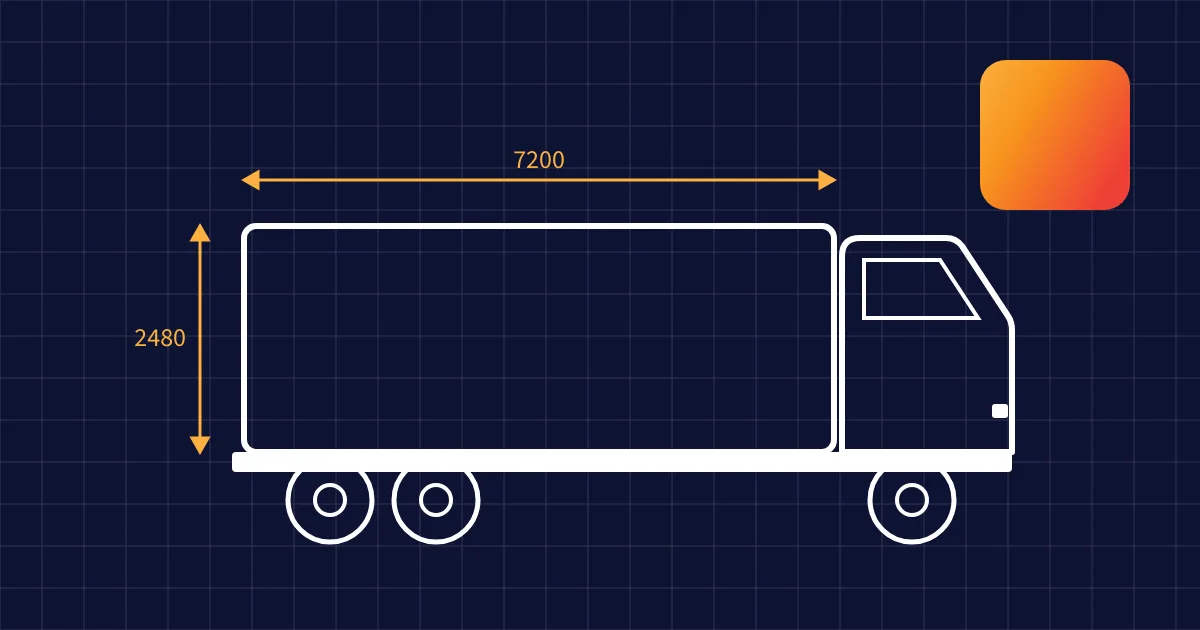


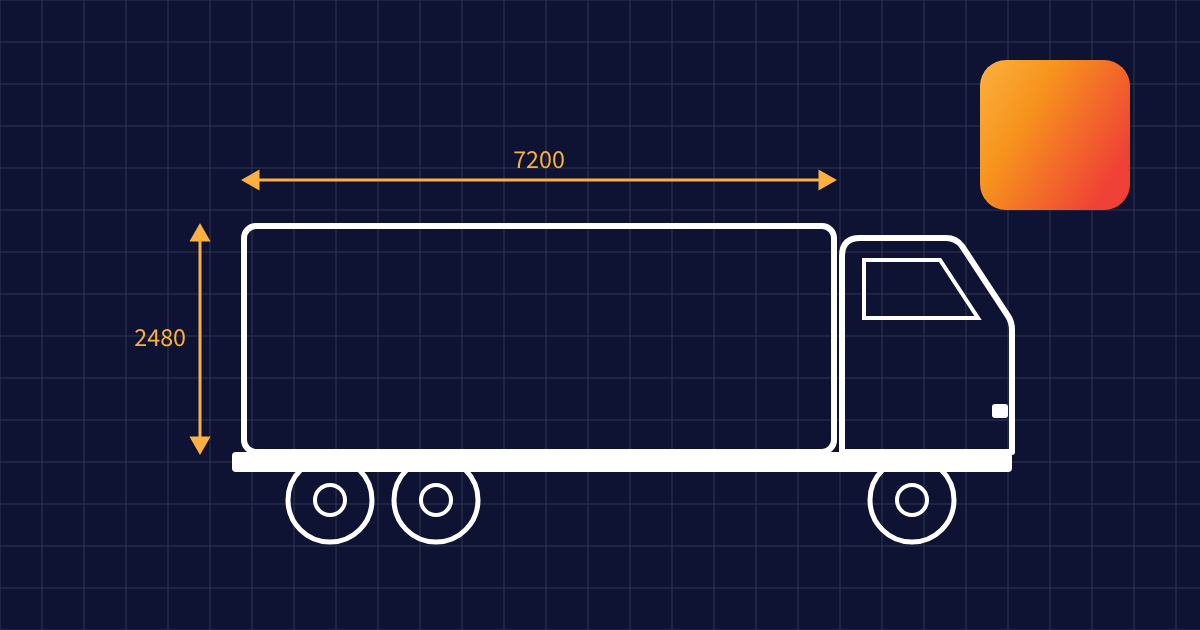
W skrócie
- Choose the body for the load and the duty cycle. The chassis follows from weight, dimensions and axle load distribution.
- Perishable food and pharma carried internationally need an insulated or refrigerated body with an ATP certificate.
- Aggregates and soil: tipper. Waste and swap containers: hooklift or skip loader.
- A complete enquiry shortens quoting: load, internal dimensions, GVW, chassis, deadline and service region.
- 10 body types compared
- 18 EUR pallets on a 7.2 m body
- K ≤ 0.40 W/m²K for heavy insulation (IR)
How to choose a truck body: three questions first
Before comparing manufacturers, three questions need answers. They decide the body type, and the body type decides who can build it.
- What is carried, and at what temperature. Pallets, bulk, liquids, vehicles, waste, chilled or frozen goods.
- How it is loaded. Rear, side, top, forklift, loader crane, tail lift.
- What the duty cycle looks like. International routes, multi-drop urban distribution, construction sites.
A common mistake is choosing the chassis before the body. Wheelbase and GVW should follow from the box dimensions and load distribution, not the other way round.
Truck body types compared
| Body | Typical load | Key specs |
|---|---|---|
| Dropside | Building materials, pallets, long loads | Side height and material, loader crane, lashing points |
| Curtainsider | Pallets, general cargo | Internal height, sliding roof, EN 12642 XL |
| Box body | General cargo, removals, parcels | Dimensions, tail lift, side doors |
| Insulated body | Food on short routes | K coefficient, panel thickness |
| Refrigerated body | Food, pharma, flowers | Unit, ATP class, temperature range, compartments |
| Tipper | Aggregates, soil, rubble | Tipping direction, box material, volume m³ |
| Hooklift | Waste containers, swap bodies | Hook capacity (t), container length |
| Skip loader | Skips | Lifting capacity, lug type |
| Car transporter, recovery | Cars, machinery | Platform length, winch, ramps |
| Tanker | Fuel, food liquids, bulk powders | ADR, number of compartments, tank material |
Side-loading EUR pallets into a curtainsider body

Insulated or refrigerated: temperature-controlled bodies
An insulated body holds temperature passively through its panels. A refrigerated body adds a refrigeration unit and keeps a set range regardless of outside conditions.
The ATP agreement sets the requirements for vehicles carrying perishable foodstuffs internationally. Insulation is classified by the heat transfer coefficient K: normal insulation (IN) is K ≤ 0.70 W/m²K, heavy insulation (IR) is K ≤ 0.40 W/m²K. A class C refrigerated body holds any set point from +12 °C to −20 °C.
Refrigeration unit and ATP plate on a refrigerated body

An ATP certificate for a new vehicle is issued for up to six years and then extended after a test. Stating the target ATP class in the enquiry avoids a second round of quotes.
What to check before ordering a refrigerated body
- Unit make and capacity, mounting position, noise level for night deliveries.
- Panel thickness and thermal bridges, especially around side doors.
- Compartments for multi-temperature loads.
- Unit service points along the fleet's routes.
Tipper, hooklift, skip loader: construction and municipal bodies
A tipper carries loose bulk material. Rear tipping is the simplest option; three-way tipping helps on tight sites. A box in wear-resistant steel (e.g. Hardox) lasts longer with stone and rubble.
Hooklift truck lifting a waste container

A hooklift handles containers with a hook frame, so one truck can work with many containers and swap bodies. A skip loader lifts skips on chains attached to four lugs. The design is simpler and the containers smaller.
What an enquiry to a body builder must include
Every missing detail means another exchange of messages before a quote. An enquiry with the data below can be priced on the first pass.
- Load type and required temperature.
- Internal dimensions, volume or number of EUR pallets.
- GVW and target payload.
- Chassis: existing (make, model, wheelbase) or to be sourced by the manufacturer.
- Equipment: tail lift, loader crane, side doors, refrigeration unit, lighting.
- Required documents: ATP, EN 12642 XL, ADR, type approval.
- Country of registration and routes the vehicle will run.
- Delivery date and location.
- Region where service is needed.
Technical body drawing and an enquiry form on a desk
How Trucklo routes a truck body enquiry
Trucklo is an enquiry routing system for commercial vehicle bodies. An enquiry sent through trucklo.eu goes to manufacturers who build that body type for that chassis class and region. Bodies available immediately are listed under Ready stock.
Frequently asked questions
Which truck body is best for pallets?
Usually a curtainsider or a box body. A curtainsider allows side loading with a forklift; a box body protects the load better and locks more easily. A 7.2 m body takes 18 EUR pallets.
What is the difference between an insulated and a refrigerated body?
An insulated body only has insulated walls and holds temperature passively. A refrigerated body has a unit that keeps a set temperature, e.g. from +12 °C to −20 °C in class C.
What does EN 12642 XL mean?
It is a body strength standard. An XL body has reinforced walls that can be part of the load securing system, which reduces the number of straps needed.
Can I order a body without a chassis?
Yes. Many manufacturers mount bodies on the customer's chassis. The enquiry should give the chassis make, model and wheelbase, or state that the manufacturer should source one.
How long does it take to build a truck body?
It depends on the manufacturer, the body type and chassis availability. State the deadline in the enquiry. Bodies available immediately are listed under Ready stock on trucklo.eu.
Sources
- UNECE: ATP Agreement, Annex 1 (treaty text)
- UNECE WP.11: ATP classes A–F, mechanically refrigerated equipment
- Cemafroid: ATP marking and certificate lifecycle
Trucklo routes truck bodywork enquiries to manufacturers who build them.